Top Use Cases of Agentic AI in Business

AI systems enable routine tasks to be performed better. AI tools have become essential for business development. Smart tools make workflow organized and streamlined. Data insights are rapidly gained through AI. Technology saves both time and cost. The role of agentic AI is expanding in every field. Structured systems improve both efficiency and speed. Business models grow exponentially with the integration of AI. Digital processes become reliable through AI. Using agentic AI to increase efficiency is critical. Every business must embrace AI to stay competitive. New tools make every function more efficient and productive. Even complex problems are solved quickly by AI. The use of AI has become the new standard in business operations. Every organization achieves better results with the help of AI. Help create a strategy Each objective is clearly defined by the AI systems. AI tools help in future planning. Direction and goals are understood from data reports. Strategic decisions are managed through smart dashboards. Every level of planning is measured by AI. Smart data determines the long-term vision. The company’s direction is clearly set by AI insights. Business goals are defined by smart analysis. Decision support systems are used in every strategy. AI-based frameworks are aligned with the business mission. Risk factors are pre-estimated by AI models. AI helps optimize every project. Market trends are well analyzed by AI. AI plays a key role in making companies flexible and adaptable. AI makes decision-making faster and clearer at all levels. A structured strategy ensures timely achievement of goals. Understanding customer data Smart AI tools track consumer trends. Real-time behavior is detected using structural models. User records are automatically updated on smart dashboards. Segment analysis is made easier and faster with AI. Customer demand is defined with smart tagging. Customer data is critical to business success. Feedback collection is easily managed with AI systems. Customer value is mapped using structured insights. Preferences are easily understood with AI data. Structured systems protect customer data. Every user interaction is recorded in AI systems. AI suggestions are provided to increase customer loyalty. Personalized offers are created using AI data. Customer satisfaction surveys are automated with AI. Analysis of customer needs is improved through AI tools. The customer journey is fully tracked through AI. Streamlining the sales process AI-assisted sales communication is clearer and faster. Performance is easily monitored with AI-powered reports. Sales forecasts are made accurately using AI. With AI, responses to customer objections are received faster. AI also analyzes competitive pricing. Campaign effectiveness is monitored by AI tools. Automation of supply chain Inventory status is monitored directly through AI dashboards. Logistics coordination gets smarter with AI tools. Supply flow is stable and timely with AI. Delivery systems are managed with real-time data. The order status is automatically updated on the configured platform. The packing process is automatically optimized with smart tools. A demand-supply gap is detected with AI models. Stock planning is based on structured AI suggestions. Smart automation reduces the risk of delays. Warehouses become faster and smarter with agentic AI support. Transportation routes are optimized with AI. Inventory replenishment is timely with AI tools. Supplier performance is assessed with AI. Supply chain risks are quickly identified through AI alerts. The delivery process becomes more accurate with AI. Stock availability is analyzed with AI tools. Making HR tasks smarter AI makes the recruitment process faster. Candidates’ scoring is automatically assigned by the smart system. Leave records are updated on smart dashboards. Job matching is faster than structured systems. Annual reviews are automatically generated by AI Performance Sheets. Talent development is better managed with AI tools. Work reports are easily accessed through smart dashboards. HR alerts are automatically generated by structured systems. AI feedback forms measure engagement levels. Structured workflows make HR systems efficient. Employee training is personalized through AI. Attendance tracking is automated through AI. The payroll process is error-free through AI systems. Employee satisfaction is measured through AI surveys. HR efficiency improves exponentially with smart tools. Team performance is clearly tracked with AI support. Creating content in marketing 1. Target and reach AI tools make it easy to target people. Emails and content reach people who are truly interested. These tools increase the effectiveness of marketing. Every campaign reaches the right people directly. 2. Content and planning AI makes content creation easy. It also makes it easy to plan each post or message at the right time. AI also improves content quality. Different content is developed for each platform. 3. Performance and change AI monitors the performance of the content created. We may track how many people have viewed or reacted to it. New plans are made based on the results. The ROI of each campaign is clearly understood. 4. Social media AI tools make it easy to understand social media trends. This helps us determine what kind of content people are liking. Each platform has a unique strategy. Social media data is updated daily. 5. Campaign and strategy The status of each campaign is displayed directly on the AI dashboard. Strategy development is easy, as all data is readily available. Data is analyzed before planning. Each step is followed by an AI. 6. Personalized content AI creates unique content for each individual. This content reaches people at the right time and leaves an impact. Personalized content is more appealing to people. It also improves user response. Control of risk and security System protection is ensured by smart detection tools. Access control is managed through managed platforms. Smart monitoring tools track network behavior. AI alerts enable immediate response to threats. Security logs are automatically saved to Smart Dashboards. Unauthorized access is instantly blocked by smart firewalls. Compliance checks are completed in a timely manner through smart workflows. Risk analysis is done in real time by smart systems. System downtime is minimized through smart AI models. Business security is powered by a managed AI layer. Data encryption is powered by AI. AI detection helps prevent security breaches faster. Audit trails created by AI record every activity. Emergency response
Top Industries Adopting AI Agents in 2025
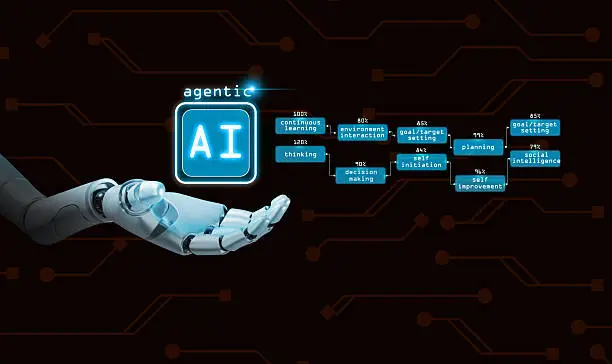
The use of AI agents is becoming ubiquitous. In 2025, every sector is adopting smart solutions. Systems are being developed to make every process efficient. Technology is disturbing businesses in modern ways each day. The slant of keen arranging and execution is developing in each sector. Data-driven decisions have become part of everyday work. Every department completes its work with the help of AI. AI has become a major player in increasing productivity. Smart systems have proven to be more efficient in planning and monitoring. This article covers industries that are adopting AI. AI tools have proven to be quite accurate in decision-making. Every system is being developed using a smart framework. The benefits of AI are being seen on both the business and consumer sides. AI agents are becoming essential for digital transformation. Health care sector Diagnosis and treatment planning are now done with smart tools. Health monitoring is possible round the clock through AI systems. Remote check-ups and record keeping are automated. Emergency alerts are sent in a timely manner through AI. Reports and prescriptions are now managed digitally. Data analysis with AI helps in faster understanding of health records. Medical processes are now streamlined due to automation. AI is also playing an important role in research and development. Hospitals connect every service with smart devices. In this field, AI agents are well integrated into real life. Lab results are analyzed with smart tools. Treatment tracking systems now show real-time results. The quality of patient care is improving with AI. Doctors and nurses get help from AI systems every day. AI solutions have proven to be fast and reliable in health emergencies. AI systems help reduce medical errors. Finance sector Fraud detection and security alerts run on smart systems. Transactions and reports are generated automatically by smart software. Stock analysis and market trend forecasting are accurate. Risk management and compliance are now overseen by AI. Financial tools have made business forecasting stronger and faster. Investment proposals are planned through smart models. Audit and compliance reports are available on smart dashboards. Automated services are helpful for both banks and consumers. Customer interactions are now mostly handled by bots and smart agents. The role of real-life AI agents in the financial world has diminished. Budget planning has also become faster and more logical with AI. Security systems have become more secure with AI monitoring. Loan approval is easily achieved with smart algorithms. Payment and billing systems are now powered by AI platforms. AI checks are considered mandatory in every financial transaction. Retail and e-commerce Retail platforms are rapidly improving with the help of smart solutions. Billing and order history is stored in digital records. The shopping process is made much faster and easier by smart apps. AI improves customer loyalty programs. Payment systems are safer and faster with smart security. Manufacturing Production systems are connected to smart robots and AI agents. Machine maintenance is scheduled using predictive AI tools. Quality control is checked with automated tools. Supply chain operations are managed on smart dashboards. AI makes stock and crude material estimating exact. Security sensors and alarms give real-time observing, making a difference to both diminish costs and make strides in effectiveness. Automation has improved manpower and system coordination. Assembly lines are being operated by smart machines. AI agents in the manufacturing sector have become powerful in real life. Daily production data is tracked using AI. Maintenance alerts are generated automatically using smart sensors. Raw material orders are made timely based on AI analysis. AI systems detect machine faults in advance. Smart robots speed up repetitive tasks. Department of Education Personalization of learning style is now possible through AI. Course planning and assignments are assigned through a smart platform. Monitoring of student progress is now done through real-time tools. Examinations and grading systems run on fully automated platforms. Virtual classrooms are made easy by smart software. Educational apps teach each subject in a customized way. Feedback and reviews are received through smart reports. Teachers use digital tools to create content. Educational improvement is monitored through AI-based dashboards. AI agents have been integrated into real life in education. Class performance data is automatically saved in Smartsheet. Learning analytics dashboards provide teachers with daily insights. Student attendance tracking is done automatically by AI. AI creates personalized learning goals for each student. Transport and logistics 1. Route planning or tracking Route planning is done accurately with smart maps. Package tracking and delivery updates come from smart systems. Shipment status is displayed on real-time dashboards. AI systems create routes faster and more accurately. 2. Automation or robotics Drones and robots make intelligent moves in warehouses. Packing and sorting robots in warehouses are powered by AI. Automated dispatch systems reduce delivery times. Robots perform repetitive and heavy tasks well. 3. Traffic and delay management Delay management and traffic control are handled by AI systems. Logistics planning is calculated using smart forecasting tools. Fuel and time savings targets are achieved through smart software. Traffic is monitored using real-time data. 4. Vehicle security and monitoring Vehicle security and monitoring are connected to smart sensors. Smart sensors monitor vehicle health in real time. AI agents in the transportation sector are fully functional in real life. Sensors detect vehicle faults early. 5. Driverless technology Driverless systems choose routes using smart GPS. Delivery speed is now enhanced through AI optimization. Bottlenecks in the supply chain are quickly identified with AI tools. Driverless vehicles follow safety rules more closely. Smart sensors understand traffic signals and road signs. 6. Performance or optimization Order management and scheduling will be automated using AI. There is a strong focus on improving transportation efficiency through AI. Resource allocation will be better planned using AI tools. There is a lot of focus on automation to reduce costs. Department of Agriculture Crop monitoring and soil testing have become possible with AI. The irrigation system is controlled by smart tools. Fertilizers and pesticides are applied through AI-based planning. Crop forecasting is done through smart analysis. Field scanning is accomplished