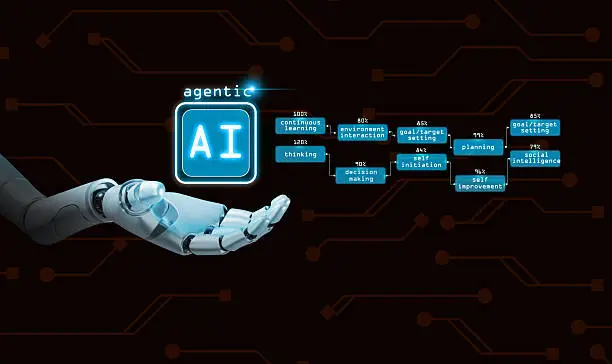
The use of AI agents is becoming ubiquitous. In 2025, every sector is adopting smart solutions. Systems are being developed to make every process efficient. Technology is disturbing businesses in modern ways each day. The slant of keen arranging and execution is developing in each sector. Data-driven decisions have become part of everyday work. Every department completes its work with the help of AI. AI has become a major player in increasing productivity.
Smart systems have proven to be more efficient in planning and monitoring. This article covers industries that are adopting AI. AI tools have proven to be quite accurate in decision-making. Every system is being developed using a smart framework. The benefits of AI are being seen on both the business and consumer sides. AI agents are becoming essential for digital transformation.
Health care sector
Diagnosis and treatment planning are now done with smart tools. Health monitoring is possible round the clock through AI systems. Remote check-ups and record keeping are automated. Emergency alerts are sent in a timely manner through AI. Reports and prescriptions are now managed digitally. Data analysis with AI helps in faster understanding of health records. Medical processes are now streamlined due to automation. AI is also playing an important role in research and development.

Hospitals connect every service with smart devices. In this field, AI agents are well integrated into real life. Lab results are analyzed with smart tools. Treatment tracking systems now show real-time results. The quality of patient care is improving with AI. Doctors and nurses get help from AI systems every day. AI solutions have proven to be fast and reliable in health emergencies. AI systems help reduce medical errors.
Finance sector
Fraud detection and security alerts run on smart systems. Transactions and reports are generated automatically by smart software. Stock analysis and market trend forecasting are accurate. Risk management and compliance are now overseen by AI. Financial tools have made business forecasting stronger and faster. Investment proposals are planned through smart models. Audit and compliance reports are available on smart dashboards. Automated services are helpful for both banks and consumers.
Customer interactions are now mostly handled by bots and smart agents. The role of real-life AI agents in the financial world has diminished. Budget planning has also become faster and more logical with AI. Security systems have become more secure with AI monitoring. Loan approval is easily achieved with smart algorithms. Payment and billing systems are now powered by AI platforms. AI checks are considered mandatory in every financial transaction.
Retail and e-commerce
- Product recommendations come from smart AI systems.
- The shopping experience becomes unique for each customer.
- Inventory control is simplified and improved with automation.
- Customer support bots respond to queries quickly.
- Delivery tracking is easy with smart tools.
- Marketing campaigns are created using AI insights.
- Demand forecasting is done accurately through smart systems.
- Fake reviews and spam are caught by AI.
Retail platforms are rapidly improving with the help of smart solutions. Billing and order history is stored in digital records. The shopping process is made much faster and easier by smart apps. AI improves customer loyalty programs. Payment systems are safer and faster with smart security.
Manufacturing
Production systems are connected to smart robots and AI agents. Machine maintenance is scheduled using predictive AI tools. Quality control is checked with automated tools. Supply chain operations are managed on smart dashboards. AI makes stock and crude material estimating exact. Security sensors and alarms give real-time observing, making a difference to both diminish costs and make strides in effectiveness. Automation has improved manpower and system coordination.
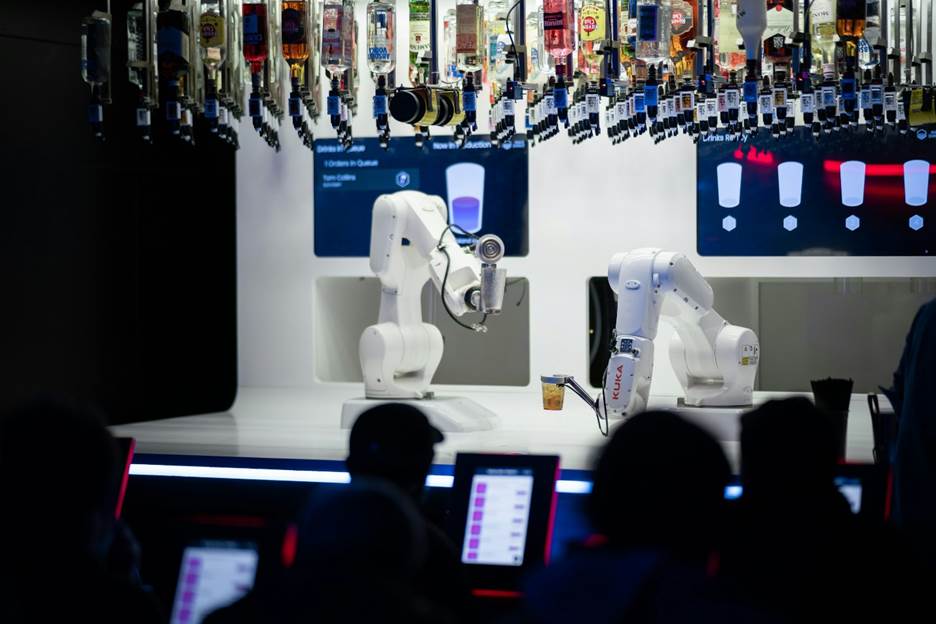
Assembly lines are being operated by smart machines. AI agents in the manufacturing sector have become powerful in real life. Daily production data is tracked using AI. Maintenance alerts are generated automatically using smart sensors. Raw material orders are made timely based on AI analysis. AI systems detect machine faults in advance. Smart robots speed up repetitive tasks.
Department of Education
Personalization of learning style is now possible through AI. Course planning and assignments are assigned through a smart platform. Monitoring of student progress is now done through real-time tools. Examinations and grading systems run on fully automated platforms. Virtual classrooms are made easy by smart software. Educational apps teach each subject in a customized way. Feedback and reviews are received through smart reports. Teachers use digital tools to create content.
Educational improvement is monitored through AI-based dashboards. AI agents have been integrated into real life in education. Class performance data is automatically saved in Smartsheet. Learning analytics dashboards provide teachers with daily insights. Student attendance tracking is done automatically by AI. AI creates personalized learning goals for each student.
Transport and logistics
1. Route planning or tracking
Route planning is done accurately with smart maps. Package tracking and delivery updates come from smart systems. Shipment status is displayed on real-time dashboards. AI systems create routes faster and more accurately.
2. Automation or robotics
Drones and robots make intelligent moves in warehouses. Packing and sorting robots in warehouses are powered by AI. Automated dispatch systems reduce delivery times. Robots perform repetitive and heavy tasks well.
3. Traffic and delay management
Delay management and traffic control are handled by AI systems. Logistics planning is calculated using smart forecasting tools. Fuel and time savings targets are achieved through smart software. Traffic is monitored using real-time data.

4. Vehicle security and monitoring
Vehicle security and monitoring are connected to smart sensors. Smart sensors monitor vehicle health in real time. AI agents in the transportation sector are fully functional in real life. Sensors detect vehicle faults early.
5. Driverless technology
Driverless systems choose routes using smart GPS. Delivery speed is now enhanced through AI optimization. Bottlenecks in the supply chain are quickly identified with AI tools. Driverless vehicles follow safety rules more closely. Smart sensors understand traffic signals and road signs.
6. Performance or optimization
Order management and scheduling will be automated using AI. There is a strong focus on improving transportation efficiency through AI. Resource allocation will be better planned using AI tools. There is a lot of focus on automation to reduce costs.
Department of Agriculture
Crop monitoring and soil testing have become possible with AI. The irrigation system is controlled by smart tools. Fertilizers and pesticides are applied through AI-based planning. Crop forecasting is done through smart analysis. Field scanning is accomplished faster with drones and automation. Early detection of crop diseases through AI algorithms. Productivity and land use are optimized with smart insights. Farming decisions are made based on AI data.
Weather and soil reports are available on smart apps. AI agents in the agricultural sector grow into real life. Soil quality is recorded by smart sensors. Crop results are predicted in advance with AI. Machines operate on time with smart controls. Farming tools save energy and water through AI. Pest control is accurate through smart AI systems.
Media and entertainment
Streaming services recommend content using smart algorithms. User behavior tracking through AI is real-time. Music and video production tools now use smart software. Editing and mixing are fast and accurate with smart tools. Social media platforms perform content filtering with AI. Ad targeting is determined by intelligent audience insights. Content creation generates creative ideas from AI platforms. Audience engagement is monitored with AI dashboards. Virtual reality and gaming experiences are enhanced with smart upgrades.

In the entertainment industry, AI agents are closely related to real life. Media platforms understand audience tastes through AI. Creative workflows become faster and more flexible with the integration of AI. Content distribution becomes increasingly ubiquitous with AI networks. Personalized ads become relevant and engaging through AI.
Conclusion
Every industry is progressing through smart solutions. AI systems are automating everyday tasks. AI tools are helping with planning, security, and productivity. Smart dashboards make monitoring and reporting faster. The trend of data-driven systems is spreading in every sector. AI has made the process faster, more reliable, and scalable. Cost and time-saving goals are achieved through AI. Business models have moved towards smart integration. AI agents are now commonplace in real life.
In the future scenario, AI will be seen working everywhere. Every new service is being developed by smart systems. Innovation is moving towards automation and AI. Human life has become much easier through technology. Adoption of AI has also opened up new employment opportunities. The digital economy is growing even faster with AI integration.