Ethical Challenges in Developing Agentic AI

Agentic AI plays an important role in everyday life. These machines are always making their own choices. Technology is advancing rapidly every day for everyone. This creates both advantages and problems. Understanding ethical issues has become very important. Everyone should understand the responsibility of each system. This technology shows the world new ways. Every new innovation raises some questions. Human dignity and integrity should be above all else. Responsible technology makes us safer and better. Agentic AI is opening new avenues in human life. Every new invention makes the world better. Ethical thinking and action strengthen the system. Agentic AI is growing in understanding and responsibility. Everyone should understand both the benefits and risks of AI. Details about Agentic AI Agentic AI makes its decisions with thought and understanding. This machine improves through its own learning. Each system’s algorithm makes sense of the data. Systems improve by learning from their mistakes. This technology aims to make life easier. With the help of data, the system finds new ways. Every time the system faces new challenges. AI learns from its surroundings to make better conclusions. The system itself keeps improving its advice. New ideas and solutions emerge from this technology. AI improves its advice over time. Each system improves its understanding with new data. Machine learning makes decision-making even better. Agentic AI quickly understands new situations. These systems work without human assistance. Every day the system improves its advice with new data. The issue of liability Responsibility is linked to justice and integrity. Without it, technology can often cause harm. Every person should act according to his own responsibility. When decisions are made responsibly, problems are reduced. Duty makes the framework way better and more dependable. Every decision has an impact on people’s lives. Data bias and fairness The right quality of information progresses choices. Wrong information leads to wrong and unjustifiable choices. Fair data makes agentic AI systems fair. Regular testing is essential to prevent bias. The correct advice of the system is based on the data. Inaccurate data creates new and difficult problems. All data should be evaluated equally. Unbiased data promotes fairness and equity. The data must not discriminate at any cost. Data of all classes and people should be included. Equality in data enhances fairness. Every system improves with unbiased data. Preventing bias is a fundamental requirement for AI. Data bias spreads injustice in society. Every decision should be based on the same data. Emphasis should be placed on improving data quality. Protection of Privacy Keeping data secure is a requirement of every system. Duty to keep personal information private and secure. Data should be taken only as needed. Getting people’s consent is very important. Without privacy, people lose trust. Every system should focus on its own security. Preventing misuse of data is very important. Privacy policies must be strictly followed. People should be informed about their data. Privacy laws should apply in every country. Data security increases people’s trust. Privacy policies must be strictly followed. Privacy of personal data is essential for every system. Lack of privacy can be very damaging. Everyone should have full rights to their information. Information security is the system’s top priority. Transparency and clarity Every decision should be easy for everyone. One must understand the system that operates. Clear statements increase people’s confidence. Each system must explain its decisions. The implications of the decision should be clear to all. Clarity helps people understand the system better. Understanding the system specification is important for everyone. Transparency removes wrongdoings and doubts. Clarity builds trust between humans and machines. Clearing doubts is the real sign of transparency. When there is transparency, everyone is happy. Correcting wrongdoing leads to improvement. Doubt undermines trust. Transparency strengthens relationships. The logic behind each decision should be easily understood. Transparency exposes flaws and corrects them. Clarity reduces the potential for misuse. Every system should show the logic of its decisions. People trust the system after understanding the logic. Preventing misuse is the responsibility of every technology. Clarity reduces the chances of fraud. Transparency builds deep trust in relationships. Transparency makes people trust the system. Transparency also makes the system aware of its weaknesses. When people trust, the system improves. By understanding the shortcomings, the framework can be moved forward. Straightforwardness fortifies the system. Building trust makes work easier. Decisions can be easily understood with explanations. The public should be fully informed about every decision. Everyone should get their information. People make better decisions with information. Complete data should be available to everyone. Information sharing improves the system. Information improves decisions. Controls and Security Control is always very important for any system. Control makes it possible to prevent and protect against damage. Human supervision improves safety and solves problems. If something goes wrong, the control stops it immediately. Security measures are essential in every system. Lack of control damages the system. Human support is necessary to operate the system. Safety measures should be incorporated into the design. The system must be prepared to stop and improve. System monitoring is always important. Protects the control system from damage. Human supervision keeps the system safe. Security measures should be incorporated into every system. There is always danger due to lack of control. It is important for everyone to follow safety rules. To protect cybersecurity Cyber assaults can cause a lot of harm to the framework. Strong security is essential to protect the system. New methods provide protection to the system. Regular updates minimize risks and vulnerabilities. Hackers and cybercriminals can damage the system. A vulnerability can lead to an immediate leak of sensitive data. Strong passwords and encryption are the foundation of the system. Continuously be arranged to secure the framework. The first line of defense against cyberattacks is training. Each new update strengthens security. Preparation is basic to secure yourself from cyber assaults. Solid security secures the framework from harm. Each update strengthens security. Without cybersecurity, the system becomes vulnerable. Cyber threats can be detected in new ways. With training,
Future Trends in Agentic AI You Need to Know

AI technology is developing very rapidly. New devices and systems are being created every day. Working with AI just got easier. AI is being used in every field. Agentic AI makes its own decisions. It learns from new data. This is why it is becoming more reliable. Understanding AI is essential for every business. Growth without AI will be difficult. AI systems are getting better every day. New AI tools are coming to the industry. These increase productivity. Every branch should take advantage of AI. This technology is spreading everywhere. Knowing the importance of data is crucial. AI learns new things every day. The importance of AI is increasing in every sector. All around the world, artificial intelligence is being deployed. AI is entering new industries every day. AI also creates new jobs. Everyone needs to understand AI. AI shows its power. Work gets better with the help of AI. AI makes human life easier. New technology shows new possibilities every time. Agentic AI is very promising for the future. Self-Operating Agents Self-operating agents operate on their own. They make decisions without human help. They understand every problem and find a solution. They improve with their experience. These systems learn new things every day. They are increasingly used in healthcare and finance. In time to come, they will become smarter. They will also handle complex tasks with ease. These agents work quickly and systematically. Their network is expanding all over the world. New cases are coming up every day. These agents can also operate without human assistance. They improve in everything they do. These systems work 24 hours a day. Their risk of mistakes is low. Every new technology makes these agents faster. These agents can further analyze the data. They complete more work in less time. These systems also store data. Their benefits are increasing in every field. These agents readily grasp new challenges. Their work is reliable and fast. Industries are more productive with self-operating agents. These agents are always moving towards improvement. Automated decision-making Through automated decision-making, AI makes its own decisions. It works with the help of data. Errors are greatly reduced. The risk is also reduced. Your strategy changes for every situation. Decisions are made faster and better. Its use is increasing in every industry. Ultimately, it will help in every decision. Every decision is monitored. AI detects and stops every threat. Every new piece of data affects the decision. The rules of every industry are understood. These systems work as per the updated rules. Ethical principles are also taken into account while making decisions. Transparency in decision-making increases. Actions based on learning AI is constantly learning from new data. It improves itself. It understands each new pattern. This way it works better. Its demand is increasing in every sector. Learning makes agentic AI more reliable. New solutions emerge every day. Continuous learning is the power of AI. This makes its algorithm faster. It allows learning something new all the time. AI tools are adapting to every industry. These systems improve by learning from mistakes. AI becomes more accurate as it learns. It understands new challenges easily. The adaptability of AI is increasing. The system gets stronger with new data every day. Learning-based AI systems are future-proof. They embrace new ideas. They understand every difficulty easily. Better decisions are made through data analysis. AI is getting better every day with its learning. It updates its strategy with new technology. AI in daily planning Everyone gives purpose to their work. AI sends alerts and reminders. This ensures that deadlines are not missed. Time management is much better. Both personal and professional life get organized. Stress is reduced. Increases balance in life. AI makes planning flexible and adaptive. A better routine is created for each day. AI improves planning with its own learning. Everyone gets their fair share of time. It also reminds us of a break between tasks. Planning makes life better. It helps you prepare for a better day. Every task has a time schedule. It understands the importance of every task. Ready for every situation. With the help of AI, everyone can run their lives better. It saves time and improves life. AI also helps in adjusting plans when unexpected changes happen. It suggests better ways to complete tasks. Life becomes less stressful with AI support. Daily challenges become easier to face. AI helps keep everything on track. Smart Workflow Systems A smart workflow system automates every task. The progress of the work is monitored. Teams work better together. Work becomes faster and easier. Errors are reduced. Everyone understands their responsibility. Costs are also reduced. Projects are completed on time. Automated systems reduce the risk of errors. The status of each process is available in real time. Team members communicate easily with each other. The workflow system is updated all the time. This system connects every department. Every part of the work is known. Everyone does their job better. Workflow systems also provide flexibility. The obligation for each assignment is clear. Systems catch problems quickly. Smart workflow increases the efficiency of every department. Teams work better together. Smart systems eliminate repetitive tasks. These tools streamline every process. Workflow makes better use of resources. Human-AI Integration Humans and AI work together to do better. AI works iteratively. Humans are creative. Both work together to give better results. Communication and workflow become smooth. Everyone values their responsibility. This system helps industries in new situations. AI helps humans, not competes with them. The power of both brings new ideas together. AI helps humans make difficult decisions. This integration increases efficiency. Meeting of humans and machines gives better results. This new technology can be easily adopted. Every job requires both. AI supports human work. Human insight improves AI. The synergy of the two brings new opportunities. Human-AI integration brings new ways of working. These partnerships strengthen industries. Both complement each other’s inadequacies. This integration creates new solutions. Optimal coordination between humans and AI is essential. Scalable business
How Agentic AI Helps Cut Business Costs

Business expenses must be kept under control at all times. Every industry places great importance on cost efficiency. Automation systems make work faster and more accurate. Agentic AI has emerged as a potent remedy for contemporary technologies. It handles every business task smartly. Modern equipment increases efficiency and productivity. Achieving business goals becomes easier. Costs have to be reduced to generate higher profits. With the help of AI, operations become streamlined and streamlined. Adopting AI also provides a competitive advantage. Every organization wants to find better solutions. Traditional methods increase cost and decrease speed. The coming phase of automation in all industries is agentic AI. Making every business system efficient has become the need of the hour. AI tools enable faster development and better performance. Smart systems reduce manual workload. Modern businesses have started relying on digital solutions. In this way industries improve both their profitability and growth. What is Agentic AI? Agentic AI is a smart tool that works on its own. It takes its own decisions and gets things done. It learns from data and finds solutions for every task. AI is making rapid progress in business intelligence. These systems work on continuous improvement and feedback. Their accuracy and performance are constantly becoming better. AI models are helpful in future predictions and risk management. Self-learning AI systems are valuable for every sector. Every business process is optimized with automated intelligence. Decision-making is precise and calculated by AI. An AI system completes each task through defined logic. These devices work without human assistance. With continuous learning, AI gets smarter every day. The role of AI in business success is expanding. AI algorithms learn new ways all the time. That is why it solves every business challenge with ease. Agentic AI systems adapt to new situations. Manual system problems In manual work, data is repeatedly duplicated. Additionally, the business’s return on investment declines. Both delivery and planning are affected due to time wastage. Manual errors make the data very inaccurate. Reporting and tracking slow down. Resources are thus wasted. Business growth is disrupted. Over-reliance on people leads to delays in matters. Lack of automation causes a company to fall behind its competitors. There are also delays and errors in customer service. Over trusting people causes problems. The absence of automation causes businesses to lag behind their rivals. In manual systems, fraud also occurs. Mistakes lead to loss of customer confidence. Productivity of workforce AI tools perform repetitive tasks on their own. The workforce starts to center on their genuine potential. Workers lock in inventive and high-value assignments. Adjusting the workload moves forward execution. Stress is reduced when AI handles boring tasks. Teamwork and coordination are improved through AI. People perform more responsible and result-oriented work. Productivity increases, so targets are met on time. Training and upskilling become easier with AI. Focused employees deliver better productivity and quality. An efficient workforce also increases the confidence level of the company. Motivation increases as AI frees them from routine work. Workforce performance is linked to monitoring systems. Skilled employees focus on strategic work. Automating repetitive tasks with AI increases creativity. Increasing workforce efficiency accelerates company growth. AI gives workers the chance to pick up new skills. Process Automation Process automation saves both time and cost. AI monitors every step and avoids delays. Automation completes repetitive and routine tasks quickly. Because business workflows are automated, consistency is maintained. The risk of human error is greatly reduced. Every process is completed on schedule with AI’s assistance. Process improvement also improves customer satisfaction. Performance becomes stable as the system’s accuracy increases. Increasing the speed of operations accelerates business growth. Automation has become useful for every business sector. Automation makes it easy to get a record of department-wise output. When systems are automated, human dependence is greatly reduced. Data handling and task execution are completed faster. Faster operations improve business response time. Automated processes increase transparency and accountability. Quality is improved by reducing manual errors. Time saving AI tools play a very important role in saving time. Routine tasks are completed in minutes with AI. Planning is strengthened due to faster task completion. You can now accomplish more in less time. Completing each task quickly saves time. Time management has become a critical factor in business success. AI takes decisions faster by analyzing real-time data. It is conceivable to do more errands in less time. Utilizing time in admirable increments increases efficiency. Timing is important at every stage. System latency is reduced when AI is enabled. There is no more delay in data access and processing. Keeping up with business deadlines becomes easier with AI tools. Losses occur due to slow processes. Because of AI, every task is completed on time. Saving time reduces stress on employees. Time efficiency makes production and delivery faster. Achieving project deadlines becomes easier. People work better because of less stress. Teams can easily focus on their goals. Saving time also helps control project costs. Saving time also allows the company to work on new projects. Better time management also improves resource utilization. More profit is achieved in less time. Businesses achieve their goals faster. Saving time increases the overall efficiency of the business. Each department achieves its goals faster. Business activities begin to run smoothly. Both productivity and profit increase. The growth of the company accelerates. Smart decision-making Making keen choices is vital for trade development. AI gives precise and data-driven choices. It suggests correct action by analyzing real-time data. The decision-making process becomes faster and more reliable. AI quickly detects and removes risk factors. AI predicts the future by analyzing past records. Smart planning makes results measurable and sustainable. Business performance starts to improve with proper planning. AI is helpful in identifying data patterns. Error-free decisions increase confidence and trust. Business opportunities are not wasted by making quick decisions. AI provides high accuracy in analyzing reports. Strategic planning becomes fast and measurable. It becomes easier to make smart decisions at every business level. Competitive strategies are developed with AI
Using AI Agents for Smarter Customer Support

The world has become faster and smarter thanks to innovation. Customer support now works with advanced tools. AI agents provide 24/7 support and accurate answers. Every business strengthens its service with AI. Immediate support is available to users at all times. Human efforts are reduced with AI systems. Artificial intelligence is making its impact in every field. AI has completely transformed the customer experience. Digital support has replaced the traditional helpline system. This is critical to transform business growth. AI agents solve customer problems very easily. Competition in the digital world is increasing day by day. Fast and reliable support is the first demand of every business. The scope of support is increasing day by day with new technology. Every customer wants efficient and timely service. AI has made the service process even smoother. Pros of AI Agents AI agents are digital software that look like humans. They create smart responses from data and learning. AI systems are functional and ready for every user. Like support agents, they solve problems. Their design is customized for customer support. Companies use these agents for day-to-day operations. AI tools can easily handle more traffic. Getting help from automated systems is much easier and faster. These tools improve with each new update. Learning improves the quality of answers every day. These tools are adept at understanding customer queries. AI agents are trained in every situation. With their help, the quality of service is continuously improved. Privacy and data security are also becoming crucial in these tools. The use of AI has significantly reduced the response time. Every company is automating their collaboration. Systems regularly upgrade their capabilities. Change of support system Previously, manual support was slow and cumbersome. Now AI has made the system faster and cleaner. Automation means instant support is available on every platform. Errors and delays are drastically reduced. Manual support is now limited to critical cases only. AI has replaced traditional support. AI systems are getting better with every update. Improvements are made by understanding client criticism. Each address is replied to in a convenient and precise way. Back instruments are getting to be more user-friendly and intuitive. AI makes repetitive and boring tasks faster. Agent available 24/7 AI agents are always online and active. They never go away and handle queries all the time. The bolster framework is presently accessible 24 hours a day. Now it is possible to get help anytime. Now there is no time limit or limit on support. The need for shift systems is decreasing. AI has made support an always available and reliable solution. Help centers are ready to respond at all times. This feature is very important to the global customer base. The service is available everywhere, at any time of day. This helps businesses provide better support to international customers. 24/7 availability increases customer satisfaction. Quick response solves problems very quickly. Business reputation also improves with 24/7 availability. 24/7 support greatly improves customer confidence. Availability of support makes companies competitive. Service reliability strengthens market position. Use of natural language AI agents use human-like language. Their answers are natural and easy to understand. No robotic feel at all; every word makes sense. These tools are trained using machine learning and NLP. Language processing makes communication smoother and faster. Each user receives personalized responses. When the language is natural, the conversation seems friendly. AI agents also understand slang and regional words. The system also understands context and tone very well. This increases customer confidence. These agents also understand different languages. Each user gets the answer in his own language. Every conversation becomes personalized and engaging. This technology greatly improves customer engagement. AI systems understand each user’s style and preferences. Clarity and ease in communication is achieved. AI interprets each message correctly. Time-saving solution AI agents respond quickly and in a timely manner, saving time. Every inquiry is handled quickly and efficiently. Not every request is answered late. Fast responses eliminate the need for frequent follow-ups with customers. It also reduces the pressure on the support team. Quick responses resolve customer issues faster. Manual work has delays and bottlenecks, while AI can easily complete repetitive tasks. This reduces frustration and anger. The manual process is time-consuming and prone to many errors. AI works seamlessly and quickly. Automated systems are available at all times. When time is used properly, productivity increases. AI significantly reduces the burden on agents. The workflow of every department becomes smooth and efficient. With efficient workflows, companies achieve their goals faster. Teams can better focus on complex problems. Automated tasks save human effort. Saving time also reduces costs. Increased efficiency leads to higher customer satisfaction. It provides a competitive advantage to all companies. Doing more in less time increases profits. Low-cost solutions drive businesses forward in the market. AI adoption improves resource efficiency. Improves time management system. Instant support saves users from long waits. Fast response increases customer confidence. Good time management reduces delays and complaints. Support teams are able to plan their work effectively. All time savings improve productivity. Service at low cost AI significantly reduces support costs for companies. No need to have a large staff, though. AI agents accomplish more tasks with fewer resources. Increased efficiency leads to positive revenue. Low-cost service makes business stable and strong. An AI agent supports thousands of users simultaneously. Businesses of all sizes can afford these tools. Profits naturally increase if operational costs are low. AI is a viable and smart solution for small businesses. So the return on investment is very strong. Cost savings help companies invest in new markets. Low cost makes it easy to compete. Better results are achieved with a smaller budget. AI solutions are ideal for financial stability. Every company uses its resources effectively. Adopting AI improves long-term financial health. Cost control is very important for business growth. AI significantly reduces support costs for companies. Easy integration process AI tools are easily incorporated into websites and systems. The integration process is fast, clean, and simple. These tools
What is Agentic AI: The Future of Autonomous Intelligence in 2025

The artificial intelligence landscape is experiencing a revolutionary shift from reactive systems to autonomous, goal-driven intelligence. Agentic AI represents this transformation—a paradigm where AI systems don’t just respond to prompts but actively think, plan, and execute complex tasks with minimal human oversight. This article answers the question “what is agentic ai” Understanding Agentic AI Agentic AI is an advanced form of artificial intelligence that possesses agency—the ability to act independently, make decisions, and pursue specific goals autonomously. Unlike traditional AI systems that wait for commands or follow predefined rules, agentic AI can perceive its environment, formulate strategies, execute actions, and adapt to changing conditions in real-time. At its core, agentic AI combines the generative capabilities of large language models with the precision of traditional programming, adding the crucial element of autonomous decision-making. These systems can break down complex, multi-step problems into manageable subtasks and work through them methodically, moving beyond simple query-response patterns toward structured problem-solving approaches. How Agentic AI Differs from Traditional AI The fundamental distinction lies in their operational philosophy and capabilities: Traditional AI Systems Agentic AI Systems According to research, agentic AI systems demonstrate higher levels of autonomy compared to traditional AI agents, with the ability to make independent decisions without constant human oversight. They focus on achieving long-term goals rather than executing isolated tasks, adapting their strategies as necessary to accomplish these objectives. Core Characteristics of Agentic AI Autonomy and Independence Agentic systems operate with minimal human intervention, capable of making decisions and executing tasks independently. They can navigate complex, unpredictable environments while maintaining progress toward their core objectives. Reasoning and Planning These systems employ sophisticated cognitive modules that assess situations, recall past experiences, generate strategic options, and decide on optimal actions aligned with their goals. They can evaluate multiple scenarios and consider outcomes like cost, speed, and impact to identify the most effective course of action. Adaptability and Learning Agentic AI continuously improves through experience, using feedback loops for optimization. After executing actions, agents observe and evaluate results, comparing them against expectations and updating their internal models for future decision-making. Multi-step Execution Unlike simple automation tools, agentic systems can handle complex workflows that require sequential decision-making, error handling, and dynamic adjustment of approaches when encountering obstacles. How Agentic AI Works The architecture of agentic AI operates through a continuous closed-loop system consisting of five key components: 1. Perception Module Acts as the agent’s sensory system, gathering and interpreting diverse data from structured databases, unstructured text, sensor data, and visual images. Using technologies like computer vision and natural language processing, it filters noise and delivers contextual environmental snapshots. 2. Cognitive Layer The reasoning brain that processes information and makes decisions. It leverages AI models such as inference engines, neural networks, or large language models to assess situations, generate strategic options, and choose optimal actions based on predefined goals. 3. Planning Component Formulates strategic plans aligned with objectives by evaluating different scenarios and considering various outcomes. For instance, a supply chain agent encountering delays will proactively explore alternative routes and logistics to minimize disruption. 4. Action Module Executes decisions through integration with APIs, robotic automation, or direct physical actuators. Whether updating databases, triggering business processes, or controlling equipment, this module ensures decisions translate into concrete outcomes. 5. Learning System Continuously observes and evaluates results, comparing them against expectations and updating the agent’s models. This enables progressive refinement of accuracy and effectiveness through successive cycles. Real-World Applications and Use Cases Business Operations Healthcare and Life Sciences Technology and Development Benefits and Advantages Enhanced Productivity Agentic AI can automate both routine and complex tasks, freeing human workers to focus on higher-value activities that require creativity and strategic thinking. Companies implementing these systems have reported up to 90% reduction in operational costs for routine tasks. Improved Decision-Making These systems can process vast amounts of data, identify patterns, and make informed decisions faster than human operators. They utilize machine learning to filter and analyze data, learning from experience to continuously improve decision-making processes. 24/7 Operations Unlike human workers, agentic systems can operate continuously without breaks, significantly increasing operational efficiency and responsiveness. They can handle multiple tasks simultaneously across various domains. Scalability and Flexibility Agentic AI can scale horizontally without proportional increases in staffing, allowing organizations to support more business use cases without linear headcount growth. They adapt to changing circumstances and requirements with real-time responsiveness. Challenges and Limitations Trust and Explainability One of the primary challenges is ensuring these autonomous systems can justify their actions and decisions. Without transparency, organizations struggle to trust autonomous processes. Essential capabilities include comprehensive action logging and decision pathway visibility. Safety and Control Agentic systems require well-defined operational boundaries, including role-based access controls, approval workflows for high-impact changes, and sandboxed environments for testing. Technical Complexity These systems present unique debugging challenges compared to deterministic systems, requiring specialized observability tools and versioning systems. Current frameworks still have limitations in memory retention, multi-agent coordination, and tool integration. Organizational Change Deploying agentic AI isn’t purely technical—it requires cultural alignment and new collaboration models between staff and AI agents. Teams must accept responsibility shifts from humans to autonomous systems. Multi-Agent Systems and Collaboration The evolution toward multi-agent systems represents the next frontier in agentic AI. These systems involve multiple specialized AI agents working together, each with distinct roles and capabilities, coordinating to achieve complex objectives that would be impossible for single agents. Types of Multi-Agent Architectures Benefits of Multi-Agent Collaboration The Future of Agentic AI Emerging Trends for 2025 and Beyond Increased Personalization: AI agents will provide more tailored experiences based on user preferences and behavior patterns. Enhanced Interoperability: Greater integration between different tools and platforms, enabling seamless collaboration across diverse systems. Democratized Development: Easier-to-use frameworks making agentic AI accessible to non-specialists, accelerating adoption across industries. Regulatory Frameworks: Development of governance structures and ethical guidelines to manage autonomous agent behavior responsibly. Market Projections According to industry research, the global agentic AI tools market is experiencing explosive growth, projected to reach $10.41 billion in 2025 with a compound annual growth rate of approximately 56.1%. Gartner predicts that by 2029, agentic AI will autonomously resolve 80%
Type of AI Agents: A Comprehensive Guide to Intelligent Automation

Artificial Intelligence has evolved from simple computer programs to sophisticated systems capable of autonomous decision-making and learning. At the heart of this transformation are AI agents—intelligent software entities that can perceive their environment, process information, and take actions to achieve specific goals. Understanding the different type of AI agents is crucial for businesses and developers looking to implement intelligent automation solutions that can adapt, learn, and operate with minimal human intervention. What Are AI Agents? AI agents are autonomous software systems that use artificial intelligence to observe their environment, make decisions, and execute actions to achieve predetermined objectives. Unlike traditional software that follows rigid programming instructions, AI agents demonstrate reasoning, planning, and memory capabilities with varying degrees of independence. They can process multimodal information including text, voice, video, audio, and code simultaneously, enabling them to engage in complex decision-making processes. The fundamental architecture of an AI agent consists of four core components: The Seven Primary Type of AI Agents 1. Simple Reflex Agents Simple reflex agents represent the first type of AI agents, operating on straightforward condition-action rules without memory or learning capabilities. These agents respond immediately to current environmental stimuli using predefined “if-then” logic, making them highly efficient for stable, predictable environments. Key Characteristics: Real-World Applications: 2. Model-Based Reflex Agents Model-based reflex agents maintain an internal representation of their environment, allowing them to make informed decisions in partially observable situations. These agents track how the world evolves over time and understand how their actions affect the environment, making them more sophisticated than simple reflex agents. This is second type of AI Agent. Key Features: Business Applications: 3. Goal-Based Agents Goal-based agents elevate AI decision-making by focusing on achieving specific objectives rather than simply reacting to stimuli. These agents evaluate multiple possible action sequences and select the path that best advances them toward their defined goals. This is third type of AI Agent. Core Capabilities: Industry Examples: 4. Utility-Based Agents Utility-based agents represent a sophisticated approach to AI decision-making, employing complex utility functions to maximize desired outcomes across multiple criteria. Unlike goal-based agents that focus on binary success/failure, utility agents evaluate the relative desirability of different outcomes. This is fourth type of AI Agent. Advanced Features: Enterprise Applications: 5. Learning Agents Learning agents represent the pinnacle of adaptive AI, continuously improving their performance through experience and feedback. These agents can adapt to changing environments, discover new patterns, and refine their decision-making processes over time. This is fifth type of AI Agent. Learning Components: Transformative Applications: 6. Hierarchical Agents Hierarchical agents organize complex tasks through layered management structures, with higher-level agents coordinating multiple specialized sub-agents. This architecture enables efficient task decomposition and parallel processing of complex workflows. This is sixth type of AI Agent. Structural Benefits: Enterprise Implementations: 7. Multi-Agent Systems (MAS) Multi-agent systems represent the collaborative future of AI, where multiple autonomous agents work together to solve complex problems that exceed individual agent capabilities. These systems demonstrate emergent intelligence through agent interaction and coordination. This is seventh type of AI Agent. System Types: Real-World Impact: AI Agent Classification by Interaction Model Reactive vs. Proactive Agents The distinction between reactive and proactive AI agents represents a fundamental shift in artificial intelligence capabilities. While reactive agents respond to immediate stimuli, proactive agents anticipate future needs and take initiative without direct prompting. Reactive Agent Characteristics: Proactive Agent Advantages: Autonomous vs. Assisted Agents Autonomous agents operate independently with minimal human oversight, capable of planning, prioritizing, and executing multi-step decisions. In contrast, AI assistants collaborate directly with users, requiring human supervision for decision-making. Feature Autonomous Agents AI Assistants Decision Making Independent, based on learned behavior Requires human approval for major decisions Initiative Proactively identifies and addresses issues Responds to user requests and prompts Learning Continuously adapts without human intervention Learns from user feedback and preferences Applications Self-driving cars, trading algorithms Virtual assistants, recommendation systems Industry Applications and Use Cases Customer Service and Support AI agents are revolutionizing customer service through 24/7 availability and personalized interactions. Modern conversational AI agents can handle complex queries, maintain context across interactions, and seamlessly escalate issues to human agents when necessary. Key Benefits: Implementation Examples: Common use cases of conversational AI agents include self-service chatbots, contact center automation, customer engagement automation, conversational commerce automation, and ITSM/HR virtual assistants Healthcare and Medical Applications Healthcare AI agents are transforming patient care through predictive diagnostics, remote monitoring, and administrative automation. These agents help healthcare providers deliver personalized care while reducing operational costs and improving patient outcomes. Clinical Applications: Financial Services and Banking Financial institutions leverage AI agents for fraud detection, risk assessment, and customer service automation. These systems process vast amounts of transaction data in real-time, identifying patterns and anomalies that human analysts might miss. Financial AI Applications: AI agent use cases in business automation include support, development, marketing, logistics, and knowledge management Manufacturing and Industrial Automation Manufacturing companies deploy AI agents for predictive maintenance, quality control, and production optimization. These systems monitor equipment health, predict failures, and optimize production schedules to maximize efficiency. Industrial Applications: Technical Architecture and Implementation Core Components of AI Agents Modern AI agents integrate multiple technologies to achieve autonomous operation. The fundamental architecture includes: Deep Learning Architectures: Decision-Making Frameworks: Development Frameworks and Platforms Several frameworks facilitate AI agent development and deployment: Popular Development Tools: Future Trends and Considerations Emerging Capabilities The next generation of type of AI agents incorporates multimodal capabilities, processing text, voice, video, and images simultaneously. These agents demonstrate enhanced emotional understanding and can engage in more natural, human-like interactions. Advanced Features: Implementation Challenges Organizations face several considerations when deploying AI agents: Technical Challenges: Business Considerations: Conclusion The landscape of type of AI agents continues to evolve rapidly, offering unprecedented opportunities for business automation and intelligent decision-making. From simple reflex agents handling basic tasks to sophisticated multi-agent systems coordinating complex workflows, each type of AI agent serves specific purposes and offers unique advantages. Understanding these different types enables organizations to select the appropriate agent architecture for their specific needs—whether implementing basic automation through simple reflex agents or deploying advanced learning systems that continuously adapt and improve. As AI technology advances, the integration of multiple type of AI Agents working in harmony will become increasingly common, creating more
How Agentic AI Enhances App User Experience in 2025

Applications are being used more and more frequently. Everyone wants a fast and easy app. Agentic AI makes apps smarter and more efficient. App quality and speed are enhanced by AI technology. Every user gets an enhanced and personalized experience. AI makes apps reliable and interactive. The success of apps in the digital sphere depends on AI. Modern apps without AI seem useless. Every app developer makes AI their own way. Apps become more intelligent and efficient with AI. AI develops new features every day. Apps improve performance due to AI. User-friendly apps are only possible with AI. Agentic AI makes the future of apps bright. Every business should integrate AI into their app. AI brings new ideas and solutions every day. Apps make every problem easier with the help of AI. AI technology makes apps more valuable to users. What is Agentic AI? Agentic AI is a technology that learns on its own. It understands user behavior and preferences. AI enhances app performance by analyzing data. Every app becomes smart and adaptive by utilizing AI. AI makes decision-making quicker and more precise. The two main tools of artificial intelligence are computation and machine learning. AI brings automatic updates and improvements to apps. It makes apps more responsive and user-friendly. Agentic makes AI apps future-proof and innovative. Every app developer uses AI technology. Modern apps are incomplete without AI. AI has self-learning and self-correcting capabilities. Every app is dynamic and interactive due to AI. AI improves the reliability and scalability of apps. New features are easily developed with AI integration in apps. AI constantly updates its skills with new data. Each app solves complex problems through AI. Innovation in apps is difficult without AI. The effect of personalization Personalization makes apps special to the user. AI provides features by understanding each user’s data. It makes using the app easy, fast, and favorite. Each user gets only what he needs. The app is getting better and better every day it comes to the user. The user feels that the app understands his thoughts. This type of personalization keeps the user happy with the app. The app understands user needs at every step. This makes the experience smooth and helpful for the user. Personalization is very beneficial for every business. The app gets smarter and more relevant with every update. The personal touch makes the app unique in the market. Navigation location AI makes menus and buttons simple and accessible. Users can easily find each feature. Clear navigation saves user time. Smooth navigation makes using the app enjoyable for the user. AI customizes the flow by understanding the user’s interaction style. Everything in the app is logically organized and accessible. Good navigation reduces user frustration. AI adjusts navigation according to each device. The user finds information quickly and easily on every screen. AI identifies and fixes navigation errors and bugs. Faster navigation improves the credibility of the app. User-friendly navigation improves app usability. AI continuously improves navigation design. Clean navigation buttons do not confuse the user. Every app should keep its navigation system updated. Navigation bars, menus, and icons should be simple and consistent. AI navigation makes app flow feel natural. Smooth navigation improves user retention. Smart notification system AI sends only relevant and important notifications. The user’s time and context determine which notifications they get. Irrelevant alerts annoy the user, which AI prevents. Smart notifications provide useful information to the user. Notifications send important updates and offers to the user. Users get options to customize alerts. Notifications maintain the user’s interest in the application. AI improves notifications by personalizing them. Every app should have an effective notification system. The user is encouraged to utilize the app more with smart alerts. The design of notifications should be simple and attractive. If notifications are timely and useful, they attract the user’s attention. AI blocks spam notifications so that the user is not disturbed. Notifications increase user app loyalty and retention. Smart notifications help in marketing and branding apps. Notifications remind the user in a timely manner. AI increases app engagement through notifications. AI protects the user from unnecessary alerts. Real-time suggestions AI analyzes user actions in real-time. Then it shows relevant and useful suggestions to the user. Suggestions save the user both time and effort. Personalized recommendations are generated for each user. AI suggestions are based on user preferences and needs. AI constantly analyzes data and updates suggestions. Suggestions make the app more interactive and engaging. Real-time recommendations increase app usability and value. Suggestions allow the user to explore new options and ideas. Every app should improve its recommendation features. Suggestions make app features and content accessible. Real-time suggestions improve and optimize apps. The user always gets relevant and timely suggestions. Suggestions are accurate and useful thanks to AI. Recommendations are also based on the user’s browsing history. AI suggestions make the app more responsive. Users follow suggestions, increasing app usage. AI suggestions keep the user more motivated and satisfied. Speed and efficiency Agentic AI makes apps faster and more efficient. Load time is significantly reduced. Apps run smoothly, and lag is less of an issue. AI manages resources intelligently. Fast and responsive apps impress users. Optimizing AI apps improves their performance. Apps run faster, and the user experience is better. AI handles background tasks efficiently. By expanding the speed, the client spends more time in the app. Every app should focus on performance optimization. With the help of AI, apps perform well on every device. Slow apps bore the user, and they leave it. AI reduces the response time of apps. Developing apps faster increases their popularity. AI makes apps stable and reliable. Performance is the key factor for the success of AI apps. Speed increases user satisfaction. AI helps apps process heavy data faster. Fast apps are appealing to every user. Error handling and recovery AI quickly detects errors in apps. Automatically fixes errors and provides alerts. Users face fewer obstacles. AI makes the user experience smooth and hassle-free. Error
Automating Tasks Using Intelligent AI Agents
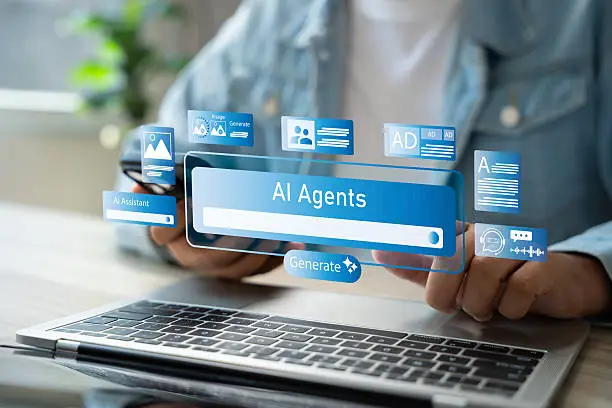
New systems make everyday tasks easier. Smart tools make work faster and more accurate. Automation improves everyday work. Companies run their business easily with the help of technology. Using smart tools has become very important. Automation greatly reduces work pressure. Both data and work become safer and faster with automation. Every system benefits from automation. Now automation is common everywhere. Its use is increasing in all industries. Automation saves both labor and time. Work results are better and more reliable. Humans are making their lives easier with automation. Technology is bringing new ideas and tools every day. Every business wants to automate its operations. Work methods are changing due to automation. Automation helps reduce errors. New tools are becoming more powerful every day. Automation has brought efficiency to a new level in industries. Everyone is realizing the benefits of automation in their lives. Introduction to Intelligent AI Agents AI agents work by learning on their own. These tools work fast and accurately. Advanced algorithms perform smart actions easily. Smart agents understand the data around them. These systems make decisions based on data. They make you better. Their functionality improves with each update. AI agents make automation more reliable. They work smartly. Their design is similar to the human brain. AI systems solve complex problems easily. The use of AI agents is increasing in every sector. Intelligent agents are more accurate in their work. They help humans in daily tasks. AI agents learn from new data all the time. They make their decisions faster and better. Intelligent systems can operate without human assistance. These tools work in a new way all the time. Smart agents perform well in all environments. AI agents quickly understand new challenges. They try to improve every system. The need for automation Doing it over and over once more is a squander of time. Shrewd apparatuses get the work done quicker. Most tasks become easier with automation. Everyday tasks are done faster with automation. Demand for automation is increasing everywhere. Automation saves both time and effort. Work becomes more reliable with automation. The benefits of automation are visible in every system. Every organization is moving towards automation. Automation meets the growing demand of business. Every task is completed quickly and accurately. Automation reduces errors. New methods and tools are used every day. Automate the task Systems make it easy to organize data. Smart tools create schedules and provide updates. Monitoring and recording is fast. Emails and alerts are also sent automatically. Tools that support decision-making are also automated. Finance and database work also get smarter. Automation makes work better and faster. Both easy and difficult tasks are automated. Work orders and deadlines are tracked. Multiple tasks are completed simultaneously through automation. Smart tools work seamlessly all the time. Automation reduces repetitive and boring work. Each system divides the work in its own way. The system helps to reduce errors. Every task is accounted for thanks to the intelligent tools. Information is updated and available at all times. Automating tasks is beneficial for business. Automation increases the power of working people. It becomes possible to control every process easily. Benefits of AI Automation Automation reduces human errors. Work speeds up and performance improves. Automation reduces manual workload. Automation increases the quality and ease of work. Automation is very important in business. Better results are achieved through automation. Work goes smoothly and saves time. With automation the process becomes clean and transparent. It becomes easy to repeat and check the work. Efficiency improves all the time with automation. With computerization, the plausibility of mistakes is incredibly decreased. Smart frameworks make way better utilization of assets. Automation increases efficiency and reduces costs. Monitoring also becomes easier with automation. Automation helps companies achieve their goals faster. Automation makes it possible to be more productive. Automation takes care of tasks that are dangerous and difficult for humans. Automated systems run on their own. New features improve automation every day. Automation is a great help in business growth. Role of Machine Learning Machine learning improves tools. It learns from data and improves its performance. Smart systems find new ways of doing things. Algorithms get updated and make the right decisions. Systems change their methods with new data. Every system faces new challenges. This is how machines improve their performance. Learning improves the system. The system gets faster with each new piece of data. Machine learning makes automation stronger. By acting on data, we get better results. The system corrects its errors repeatedly. It also improves the quality of work. Machine learning makes work faster. Training and testing are essential for the system. Machine learning systems face new challenges all the time. These systems change their style over time. Testing helps identify system vulnerabilities. The system then corrects its errors through training. Such systems are always better. Learning makes AI agents more flexible and rewarding. Machine learning helps the system correct its mistakes. New updates make the system more intelligent. AI agents learn new tasks easily. Systems find new ways all the time. Their flexibility is very beneficial for business. Machine learning makes the system better every time. Algorithms improve their decisions based on data. Machine learning is spreading automation everywhere. Machines are doing more work in every sector. This makes people’s work easier and faster. Industries are evolving rapidly due to machine learning. Automation of customer service Virtual agents provide prompt and good service. Automated responses improve service. Questions are replied to expeditiously and precisely. Smart systems keep customers happy. Support systems do their job well. Automated responses are a good alternative to live support. Correct answers improve service quality. Load handling becomes easier with automation. Chat systems make it easy to communicate with users. Customer support response time is reduced with automation. Smart systems analyze feedback quickly. Quality of service improves all the time with automation. AI helps increase customer satisfaction. Automated systems manage calls and messages. Automated systems answer many questions every day. AI solves customer problems faster. Through automation
Multi-Agent Systems and Their Enterprise Benefits

Multi-agent systems work in a new way. These systems solve problems in a smart way. Each agent completes its own task. These systems work as a team. These systems are very helpful in a business environment. Agents collect and process data. Productivity increases and work becomes easier. Technology has become part of the new business tools. Companies strengthen their systems with these tools. Systems will be used everywhere in the future. Every business wants to improve its processes. MAS makes every business smarter and more efficient. Every agent fulfills his responsibility with full responsibility. This system helps every business to go digital. Multi-agent systems are developing rapidly in industries. The system is always ready for new challenges. Every system keeps improving its performance. What is MAS? In MAS, agents work separately. Together these agents serve the same purpose. The system’s structure is straightforward and adaptable. Each agent acts by understanding the environment. When the agents are together, the system becomes smart. This system provides fast and efficient solutions. This model works very well in business. Operations become smarter and easier with the system. The coordination system among these agents becomes stronger. This structure is being used in every sector. MAS is essential for automating business. The system improves the distribution of information and division of work. Agents communicate with each other in the system. Each agent gives their reporting and feedback regularly. The MAS system makes faster and better decisions. Each agent completes the system with its responsibility. Agents understand their roles within the system. Types of agents Reactive agents perform only simple and immediate actions. They understand the cues of the environment immediately. They don’t think complexly; they just respond. Their job is to make the system react faster. These agents make the system fast and efficient. They act fast on every signal. Their role in problem-solving is small but important. Reactive agents continue to handle day-to-day operations. Their simplicity is important for the stability of the system. Cognitive agents make decisions after thinking and understanding. They analyze the situation carefully. They are very helpful in solving problems. They work smartly and intelligently. These agents can both learn and plan. They understand complex problems easily. They are very important in the business environment. Cognitive agents can also adapt to new situations. These agents use logic and data in every decision. The intermediary between the user and the system is an interface agent. They convey user input to the system. They make communication smooth and easy. These agents improve the user experience. Agents on the interface are always available to help. These agents take user feedback into the system. These agents increase system utilization. Learning agents improve themselves with new data. They improve their performance over time. They adjust their approach to every new situation. They make the system more flexible and powerful. These agents gain knowledge through experience. They solve every new problem by learning. Learning agents increase system performance. These agents make better decisions by understanding data trends. Each agent has its own specific task. Some plan, some help supervise. Every agent understands his responsibility well. Their combination makes the system complete. Special agents perform various tasks effectively. These agents keep the system organized and focused. Each agent’s part is basic to the victory of the framework. Their teamwork makes the system more productive. Communication of agents Agents share data with each other. It keeps the data exchange system smooth. Communication with every agent is secure and fast. Information flow is properly managed. Agents continue to work through real-time data. System response is better due to communication. Harmony is stronger when the connection is appropriate. Each agent takes action after understanding the data. Strong communication in business speeds up work. This system is effective at all levels. Good communication reduces errors and delays. Data sharing also makes decision-making more accurate. Agents provide feedback to improve their performance. Communication tools enhance coordination between agents. It improves trust and understanding between agents. Each agent communicates clearly to others. The benefit of communication lies in the overall efficiency of the system. Business Automation With MAS, business tasks are completed automatically. Agents can handle repetitive tasks on their own. Tasks like data entry and reporting become easier. Human errors are reduced due to automation systems. Agents work faster and give better results. Workflow improves, and systems become more efficient. Businesses save time, and costs are also reduced. Processes become easier and more reliable with automation. MAS tools show results in productivity. They are being used in every business. With automation, work gets done faster. A business uses its resources better. Automated systems complete repetitive tasks accurately. Problems caused by manual errors are reduced. Because of MAS systems, work becomes efficient and accurate. Automated tasks reduce manual labor to a great extent. Automation increases both the speed and reliability of a business. Better judgment Agents collect data and recommend decisions. Every decision is based on logic and facts. The MAS system makes fast and smart decisions. Business leaders use these decisions in their planning. Real-time data helps the system give accurate answers. This system improves business performance. Agents understand complex data easily. This is how business increases. Better decisions protect businesses from losses. Data analysis and predictions strengthen decision-making. MAS decisions drive business. Smart decisions also help in finding quick solutions to problems. Supply chain MAS helps manage the supply chain in real time. Agents monitor stock levels and place orders in a timely manner. The delivery process becomes fast and secure. Agents also handle warehouse data. Every part of the system becomes smart and streamlined. Both planning and delivery improve. The connection between suppliers and companies becomes stronger. Costs are reduced and time is saved. This system makes the supply chain smart. Business operations become faster and more reliable. Increases transparency and accuracy in the supply chain. A track record of each product delivery is maintained. Stock shortages and overstocking are avoided by MAS. Customer satisfaction increases due to timely delivery.
Collaboration Between AI Agents for Better Results

Artificial intelligence is being used in systems in new ways every day. AI solutions are being used by all organizations to speed up work. Collaboration creates robust processes between AI agents. Every agent manages distinct responsibilities that contribute to the system’s effectiveness. Increases speed, accuracy, and quality of production. AI support promotes automation in every sector. Data processing, decision-making, and task execution become smart. The workflow of digital systems has become faster and safer. Resource utilization has become smarter and cost-effective. AI models have become central to new business models. Every sector is moving towards smart technology. Innovation brings modern challenges and arrangements each day. AI systems solve complex problems easily. Every work process is improved with system support. This development improves both efficiency and productivity. AI collaboration basic idea AI collaboration means that multiple agents work together to perform the same task. Each agent is given a specific objective. Agents work independently but are connected within the system. Data sharing makes the system more powerful. The task is systematic and takes less time to complete. The role of each agent is clearly and adequately defined. Parallel work improves performance. Systems run smoothly and fast. Work is completed in a convenient and error-free way. Collaboration makes frameworks more intelligent and future-proof. Teamwork-based automation is advancing in every sector. This process opens new doors in problem-solving. Agents work to the best of their abilities. Each agent contributes according to his ability. Every agent in the system has its performance monitored. Each agent’s feedback helps improve the system. Agents improve their skills through continuous learning. Role of distributed systems In distributed systems, data and work are handled by separate agents. Each agent does his own work. The system load is distributed among all. This makes the system work better. Each agent completes its task separately. Backups are made to keep data safe. High-speed connection keeps the system strong. Agents also work remotely. Errors are found and fixed quickly. Distributed systems are perfect for smart locations. Works even in difficult times. The system handles the load easily even when it is heavy. Each module works separately. This makes the system reliable. There are ways to reduce system latency. It automatically recovers if the system fails. Agents work together easily. Everything runs smoothly. Data-sharing mechanism Data sharing between AI agents is smart and secure. Real-time data transfer keeps the system dynamic. Data is stored using secure protocols. Each agent works with the latest data. Multiple systems process the same data in parallel. The data-sharing process is monitored by a centralized system. When data is received on time, accuracy increases. Delays are avoided due to faster communication. Each module receives accurate and clean data. Maintaining data quality is essential for system performance. Smart synchronization reduces the risk of information loss. Data encryption is part of every system. Secure channels maintain data integrity. The system uses a fault-tolerant protocol. Effective tools are needed for data sharing. Every agent makes use of the data to enhance its functionality. Securing data improves system reliability. Transparency is essential at all times during data transfer. Systems use filtering to avoid redundant data. Problems in communication are solved immediately. Role-based processing In AI systems, the role of each agent is defined in advance. Each agent concentrates only on his task. Thus the possibility of duplication is eliminated. Every agent has a defined role and knows what to do. This saves time and makes work easier. There is no confusion due to the character description. The optimal agent is assigned to each task by the system. Each task is completed by a specific agent. The system works faster when roles are created. Each agent works according to his expertise. With increased performance comes better output quality. Every agent completes its work on time. System response time is also improved. Performance monitoring also becomes easier, as the responsibility of each agent is clear. When the load is balanced, no agent is too busy. This makes the system run smoothly. Equivalent load reduces stress. Monitoring tools provide data for each agent. Workflow remains organized and streamlined. When communication channels are clear, work does not stop. Clear communication eliminates confusion. Each agent knows the status of its work. Communication does not waste time. Roles can be changed, which keeps the system flexible. Each agent is trained according to his role. An agent can learn new tasks through training. A flexible system is prepared to change tasks. Training improves agent performance. A system with a flexible character adapts to new tasks. When roles are clear, mistakes are reduced. Teamwork improves, and agents work with each other with better understanding. A reliable system gives good performance all the time. This increases the productivity of the entire system. Strong teamwork helps achieve goals faster. A reliable system is useful in every field. Smart decision-making A powerful component of AI cooperation is intelligent decision-making. AI agents read data and make quick decisions. Every decision is based on data analysis and the current situation. Predictive models suggest future actions. Each process analyzes the data and gives better output. Faster decision-making saves time. Collaboration provides error-free and intelligent responses. AI planning makes every step data-driven. Each agent follows a smart algorithm. The quality of the choice depends on the quality of the information. Continuous learning progresses choice making. Decisions affect every part of the system. Real-time input progresses decision-making. Every decision is finalized with team coordination. AI agents update their decisions with new data. Smart decision-making makes the system flexible and responsive. Decisions are made according to the goals of the system. Each decision improves the performance of the system. Automation and speed Automation makes work easier, faster, and less expensive. Repetitive tasks are accomplished through smart tools. Automation increases speed and reduces human errors. The system completes the task without any delay. AI agents act in a smart way. System efficiency helps save time. Real-time work gives faster output. Smart schedules avoid system downtime. Automation has become a part